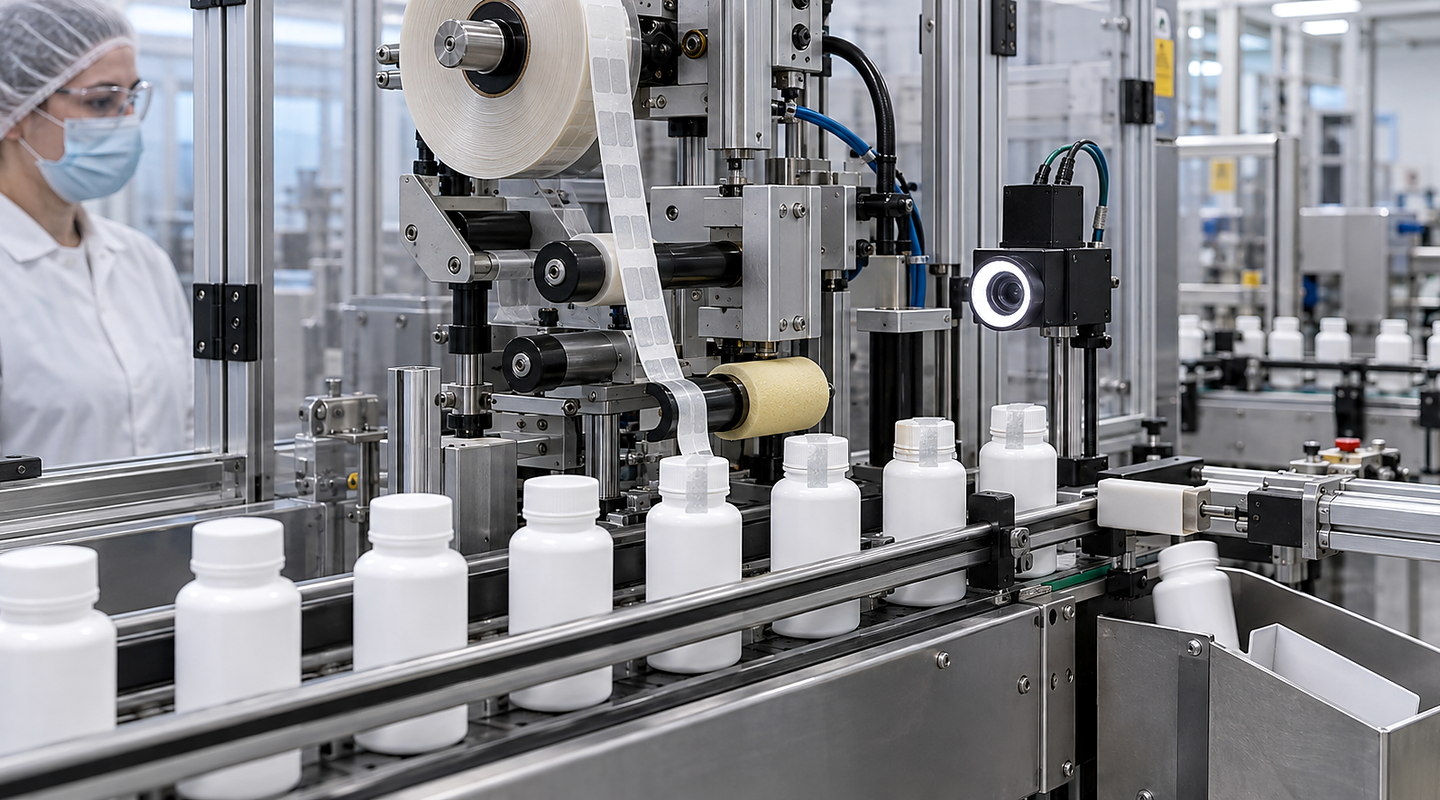
Neck Labelling Machines: How the Process Works
Plan neck labelling from representative bottles and label rolls through presentation, pressing, line interfaces, changeover and agreed finished-appearance checks.
Supply bottles and label artwork/rolls covering neck taper, shoulder shape and required orientation. Agree visible placement limits, then trial the intended label material and roll direction with bottle presentation and pressing. Check wrinkles, skew and finished appearance across the format range, including changeover and handling of out-of-limit bottles.
Use the bottle and label trial brief with the finished-pack checks. Supplier tolerances and bottle or label condition can affect the result. The proposed method needs a representative trial; no universal placement accuracy or output is assumed.
Understand the complete route from input to accepted output — Neck Labelling Machines
Plan neck labelling around bottle and neck shape, label material and roll direction, required output and finished appearance. Discuss a practical line concept with Lancing using representative bottles and labels. Follow the material or part through each operating step and include recovery, cleaning and change in the real cycle.
Discuss your application

Four clear stages for neck labelling machines
At each stage, you can review how bottle neck shape and label behaviour and finished-pack checks and reject handling affect the next commitment.
- 01
Define bottles, labels and appearance limits
Provide bottle samples, artwork and production label rolls for the normal and difficult formats. Identify neck taper, shoulder shape, required orientation and visible placement/appearance limits.
- 02
Trial presentation, pressing and neck-label application
Trial the intended material and roll direction with actual bottle presentation and pressing. Compare placement, wrinkles, skew and finished appearance against the agreed limits, recording the bottle/label combination and settings.
- 03
Resolve line flow, access and changeover
State required output, batch sizes and frequency of format changes, with infeed/discharge and control interfaces. Plan cleaning and operator access and define which presentation/pressing settings are checked during changeover.
- 04
Run format checks and agree out-of-limit handling
Run the agreed production and changeover checks across representative formats. Retain the settings and observed results, identify remaining limitations and agree how bottles outside the appearance or placement limits are identified and handled.
Decisions and results stay connected
| Stage | What happens | What you can review |
|---|---|---|
| Define bottles, labels and appearance limits | Provide bottle samples, artwork and production label rolls for the normal and difficult formats. Identify neck taper, shoulder shape, required orientation and visible placement/appearance limits. | Bottle/label format list, artwork/roll details, orientation and agreed limits. |
| Trial presentation, pressing and neck-label application | Trial the intended material and roll direction with actual bottle presentation and pressing. Compare placement, wrinkles, skew and finished appearance against the agreed limits, recording the bottle/label combination and settings. | Trial combinations, presentation/pressing settings and observed labelled-bottle results. |
| Resolve line flow, access and changeover | State required output, batch sizes and frequency of format changes, with infeed/discharge and control interfaces. Plan cleaning and operator access and define which presentation/pressing settings are checked during changeover. | Output/batch pattern, line interfaces, access/cleaning and changeover method. |
| Run format checks and agree out-of-limit handling | Run the agreed production and changeover checks across representative formats. Retain the settings and observed results, identify remaining limitations and agree how bottles outside the appearance or placement limits are identified and handled. | Format/changeover results, remaining issues and out-of-limit bottle handling. |
Keep connected responsibilities clear
Your final neck labelling machines scope must also account for cleaning, access and changeover method, finished-pack checks and reject handling, current regulations and the conditions at your site.
- The selected method must be trialled with representative product and packaging.
- Supplier tolerances and bottle or label condition can alter presentation and label application.
- Equipment selection does not replace product, hygiene, packaging or regulatory validation.