Current condition
Record the actual bottle and neck/shoulder shape with label artwork, required orientation, intended material and roll direction. Provide a representative acceptable bottle and agree visible placement and appearance limits.
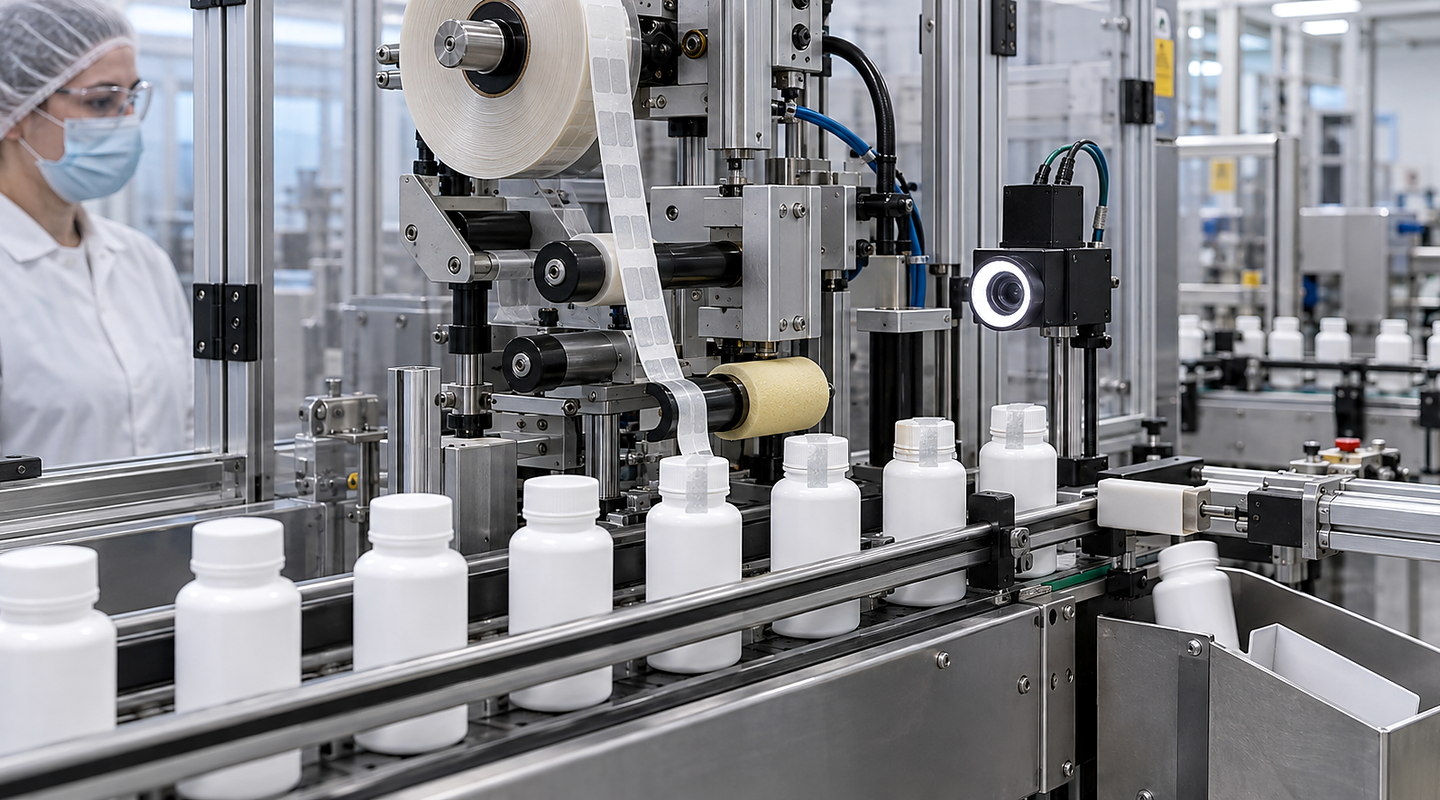
Agree neck-label trial records for placement, wrinkles, skew, finished appearance, format changeover and handling of out-of-limit bottles.
Define an acceptable labelled bottle before the trial, with visible placement limits and checks for wrinkles, skew and finished appearance. Use the intended label material and roll direction across representative formats. Record presentation and pressing settings, changeover checks and how out-of-limit bottles are identified and handled.
Use the bottle and label trial brief with the selection criteria. Supplier tolerances and bottle or label condition can affect the result. The proposed method needs a representative trial; no universal placement accuracy or output is assumed.
Plan neck labelling around bottle and neck shape, label material and roll direction, required output and finished appearance. Discuss a practical line concept with Lancing using representative bottles and labels. Use this guide to resolve finished-pack checks and reject handling before it limits the final system.
Discuss your application

Record the actual bottle and neck/shoulder shape with label artwork, required orientation, intended material and roll direction. Provide a representative acceptable bottle and agree visible placement and appearance limits.
Include the normal and difficult bottle/label formats, supplier tolerances and bottle/label conditions that the trial must cover. State batch sizes, output pattern and format-change frequency, using the production label rolls.
Show how each combination affects bottle presentation, pressing, placement, wrinkles and skew. Agree line interfaces, cleaning/access, changeover settings, finished-pack checks and handling of bottles outside the stated limits.
Identify the bottle, neck and shoulder shape and the production label roll for each acceptance run. Retain artwork, material and roll direction with the trial record.
Cover the agreed normal and difficult bottle and label combinations. Record the format and settings for each result so that acceptance is tied to the tested range.
Agree the acceptable bottle and visible placement limits before running. Record orientation, wrinkles, skew and finished appearance against that same reference.
Record the output, run duration and batch pattern actually tested, including short stops or replenishment where agreed. Keep observed results separate from untested production assumptions.
Include the agreed format-change sequence and record presentation and pressing settings. Check the first labelled bottles after a change rather than accepting a setting record alone.
Agree the check method, repetitions, acceptable range and result record, including how out-of-limit bottles are identified and handled. Record who reviews and accepts the evidence.