
Neck Labelling Machines Selection Guide
Select neck labelling by bottle/label trial evidence, presentation and pressing, placement limits, output pattern, line interfaces and practical changeover.
Compare the same bottle/neck formats and production label rolls against agreed placement and appearance limits. Review presentation and pressing trials, required output and batch pattern, infeed/discharge interfaces, cleaning/access and format-change method. Require recorded results across the normal and difficult combinations.
Use the bottle and label trial brief with the finished-pack checks. Supplier tolerances and bottle or label condition can affect the result. The proposed method needs a representative trial; no universal placement accuracy or output is assumed.
Compare options in the conditions where they must work — Neck Labelling Machines
Plan neck labelling around bottle and neck shape, label material and roll direction, required output and finished appearance. Discuss a practical line concept with Lancing using representative bottles and labels. A useful shortlist should show how every option copes with bottle neck shape and label behaviour and cleaning, access and changeover method.
Discuss your application
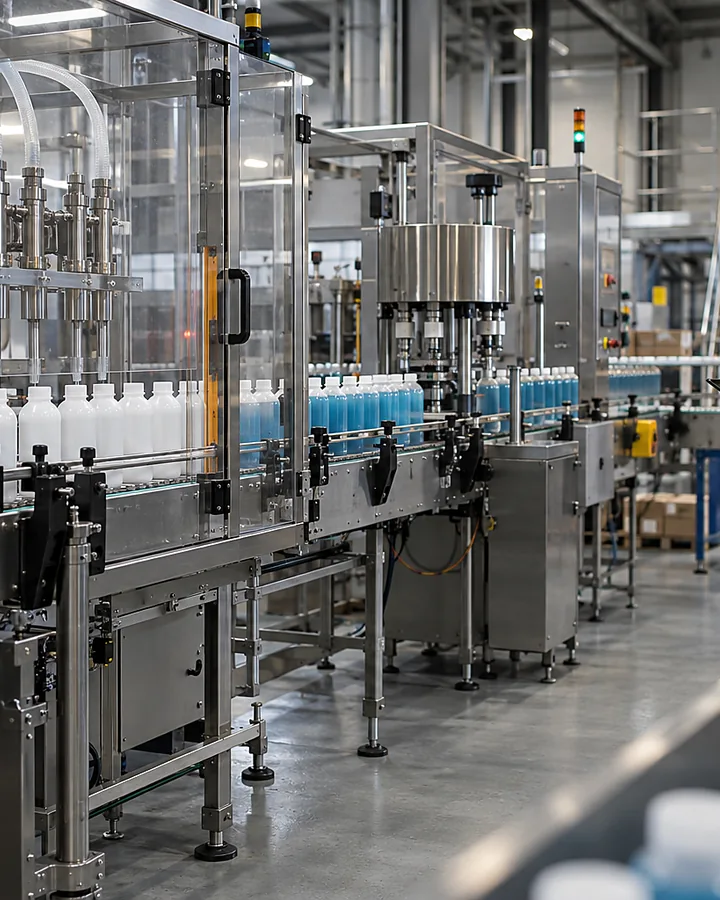
Ask every supplier the same questions
| Decision | What to ask | What to check |
|---|---|---|
| Bottle and neck shape | Which taper, shoulder shapes and formats must be covered? | Representative normal/difficult bottle samples and a defined format list. |
| Production labels | What artwork, orientation, material and roll direction will be used? | Actual artwork and intended production label rolls. |
| Placement and appearance | What visible limits define an acceptable labelled bottle? | Trial records for placement, wrinkles, skew and finished appearance. |
| Output and line flow | What output, batch sizes, change frequency and interfaces apply? | Actual production pattern, infeed/discharge and control requirements. |
| Access and changeover | How will cleaning, operator access and format changes be handled? | An agreed method and presentation/pressing settings to check. |
| Finished-pack checks | How are out-of-limit bottles identified and handled? | Retained format/changeover results and agreed disposition of unacceptable packs. |
Include simpler approaches to bottle neck-label application in your shortlist
| Approach | Often suitable when | Watch for |
|---|---|---|
| Neck-label application scope | The bottle/label combinations and finished appearance can be demonstrated in a representative trial. | Agree formats, placement limits, presentation/pressing, line interfaces and out-of-limit handling. |
| Semi-automatic equipment | Lower-volume work or frequent format changes make operator involvement practical. | Trial the actual handling, consistency, access and changeover; do not assume a nominal output covers your production pattern. |
| Automatic line integration | Repeatable bottle flow and required output justify a connected line approach. | Resolve infeed/discharge, controls, format changes, access and recovery alongside the bottle/label trials. |
Pause before choosing when…
- Only perfect or hand-selected examples of routine production using bottle neck-label application are available.
- No one has defined how finished-pack checks and reject handling will be evaluated.
- The normal range for bottle neck shape and label behaviour is described only as “usually fine” but has not been bounded.
- Your operator, cleaning, maintenance or recovery access has not been considered.
- Quoted performance depends on another machine or data source that is not included.