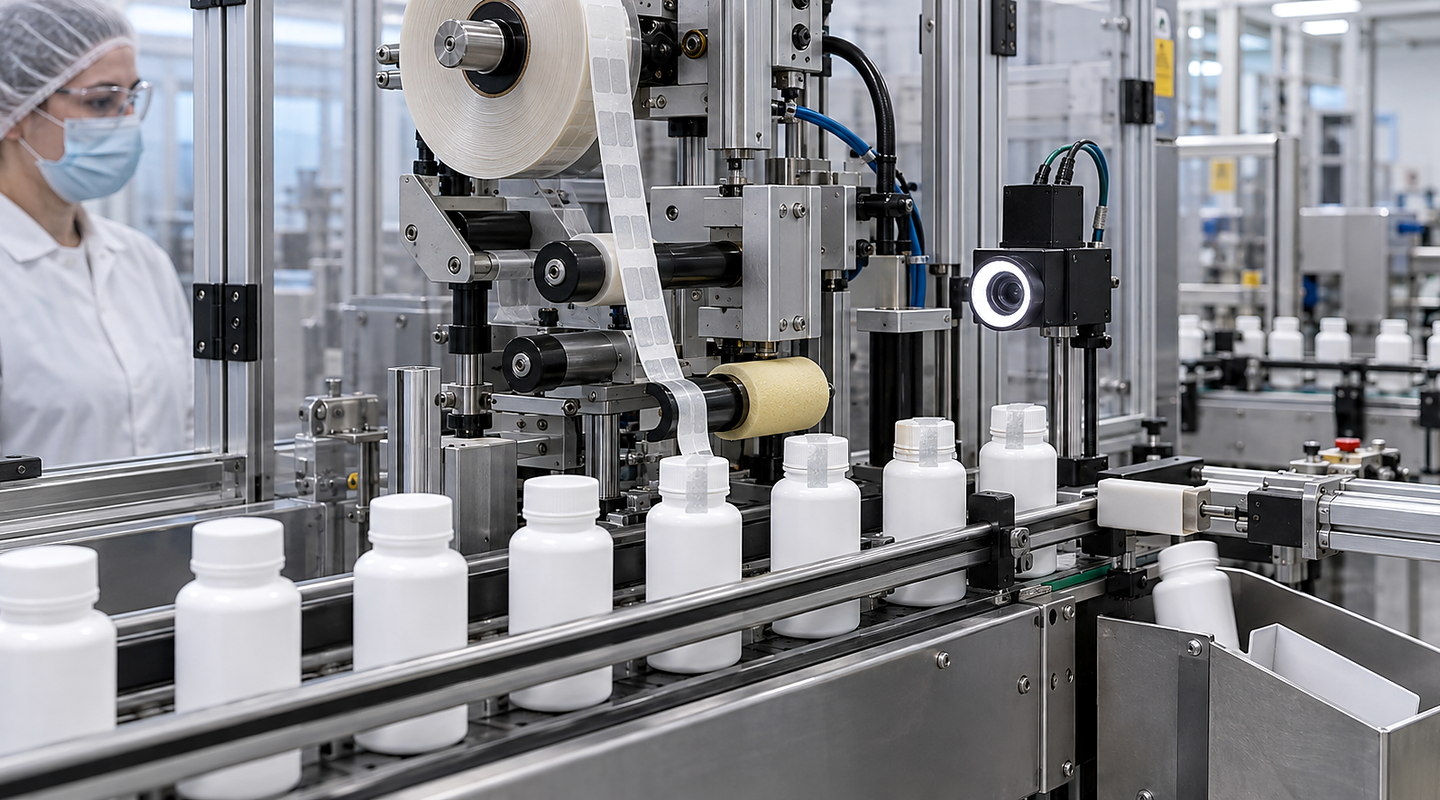
Bottle and Neck Format Range: Changeover and cleaning decisions
What decisions about bottle and neck format range materially change the system concept for neck labelling machines?
In brief
List the actual bottle and neck shapes with their label artwork, material and roll direction. Include normal and difficult formats, the intended change sequence and visible placement limits. Trial presentation and pressing for the combinations that matter; record settings and first-off appearance after each change rather than assuming one successful bottle represents the whole range.
For routine production using bottle neck-label application, describe the realistic range and how changes in bottle and neck format range affect the result you need.
On the production floor
Turn your production information into clearer decisions — Neck Labelling Machines
Plan neck labelling around bottle and neck shape, label material and roll direction, required output and finished appearance. Discuss a practical line concept with Lancing using representative bottles and labels. Use this guide to resolve bottle and neck format range before it limits the final system.
Bottle and Neck Format Range: condition, range and effect on your process
Current condition
Record each bottle reference, neck taper and shoulder shape with the intended artwork, label material and roll direction. Keep a representative bottle and label roll with the record, noting the condition and production state used for the trial.
Realistic range
Include the normal and difficult bottle and label combinations, supplier tolerances and the expected frequency and sequence of changes. State batch sizes and required output, and identify combinations that have not yet been trialled.
Effect on the system
For each combination, record how bottle presentation, pressing and settings affect placement, wrinkles and skew. Include cleaning and access, the first-off check after changeover and handling of bottles outside the agreed appearance limits.
Before you contact us
Five questions about bottle and neck format range for your application
Who can confirm this information?Identify who can confirm bottle references, neck geometry, label artwork and roll details, and who will review the changeover and first-off result.
How representative is the sample?Use the intended bottles and production label rolls, including supplier variation and the difficult combinations. Record their condition and the infeed and discharge state represented by the trial.
What is the difficult condition?Identify the neck or shoulder shape, bottle condition or label combination that is difficult to present or press consistently. Agree which cases the trial must cover and assess appearance against the stated limits.
How will you judge the result?Agree the method, repetitions, acceptable range, result record and the response if the observed result falls outside the agreed range.
What else must be coordinated?Your final neck labelling machines scope must also account for cleaning, access and changeover method, finished-pack checks and reject handling, current regulations and the conditions at your site.
Connected details
Review bottle and neck format range as part of the complete system
Question 1
Bottle Neck Shape and Label Behaviour
Group the bottle and label combinations by neck taper, shoulder shape and intended label material. Do not assume that similar overall bottle dimensions give the same presentation or pressing result.
Question 2
Bottle and Neck Format Range
List every intended bottle and label format, with representative samples and the normal and difficult cases. Record which combinations were actually included in the changeover trial.
Question 3
Label Placement and Finished Appearance
State the artwork orientation and visible placement limits for each format. Use a labelled reference bottle to compare wrinkles, skew and appearance after changing settings.
Question 4
Required Output and Production Pattern
Record batch sizes, required output and the expected order and frequency of format changes. Include infeed and discharge conditions when comparing the production pattern.
Question 5
Cleaning, Access and Changeover Method
Record the presentation and pressing settings, cleaning needs and access required when moving between formats. Check the first-off result when returning to a previously used combination.
Question 6
Finished-Pack Checks and Reject Handling
Define the finished-bottle check after each change, who reviews it and how bottles outside the limits are handled. Retain the format, settings and result as one record.